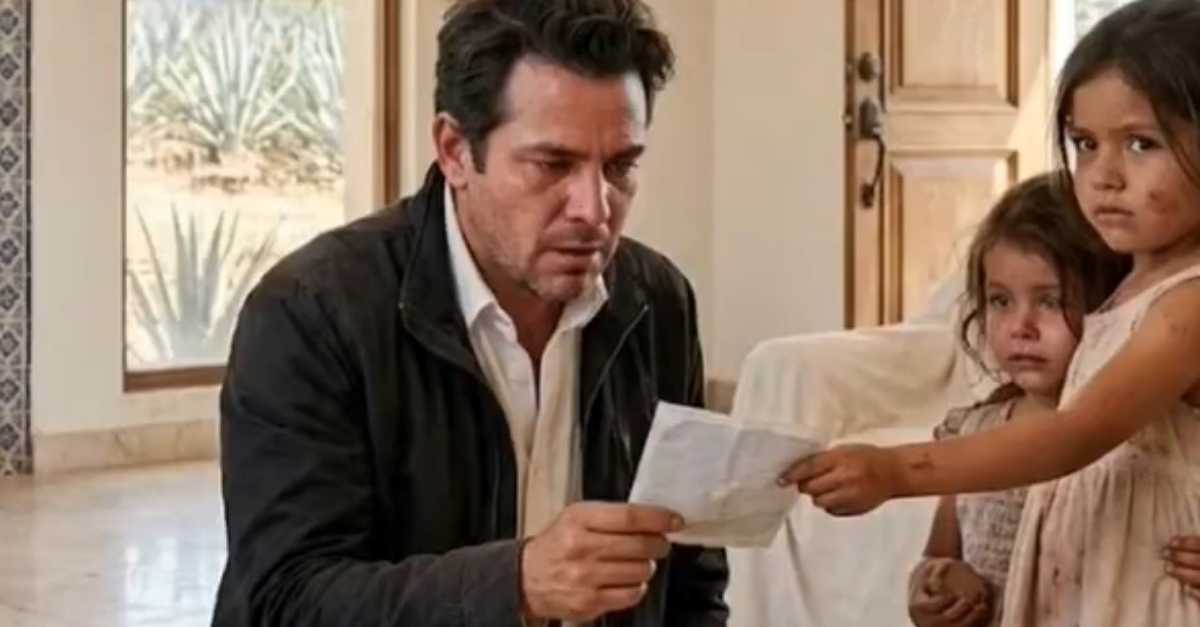
The dust of the abandoned ranch house swirled in the afternoon light as Mateo Villarreal fell to his knees, the wooden floorboards groaning beneath his weight. His heart hammered against his ribs while a barefoot little girl, no older than six, stood quietly before him. With a solemn innocence, she reached out and handed him a damp, tightly folded note that her mother had kept hidden from the world for years. Mateo’s hands trembled violently as he unfolded the paper, his eyes blurring with a sudden rush of tears before he even read the script. Beneath the note lay an old, slightly faded photograph that instantly stopped the breath in his throat.
It was a picture of his late wife, Betty, standing pregnant in front of this very ranch house, smiling a bittersweet smile that he hadn’t seen in nearly a decade. As Mateo stared at the image, the younger child who had delivered the note stood beside him, her wide eyes staring fearfully at the open, creaking doors behind his back as if the ghosts of the past were about to walk through. The silence in the room grew heavy, suffocatingly dense with secrets that had spent far too long in the dark. Mateo could feel the phantom weight of a life stolen away, his mind racing to connect the woman he loved with the decaying walls around him.
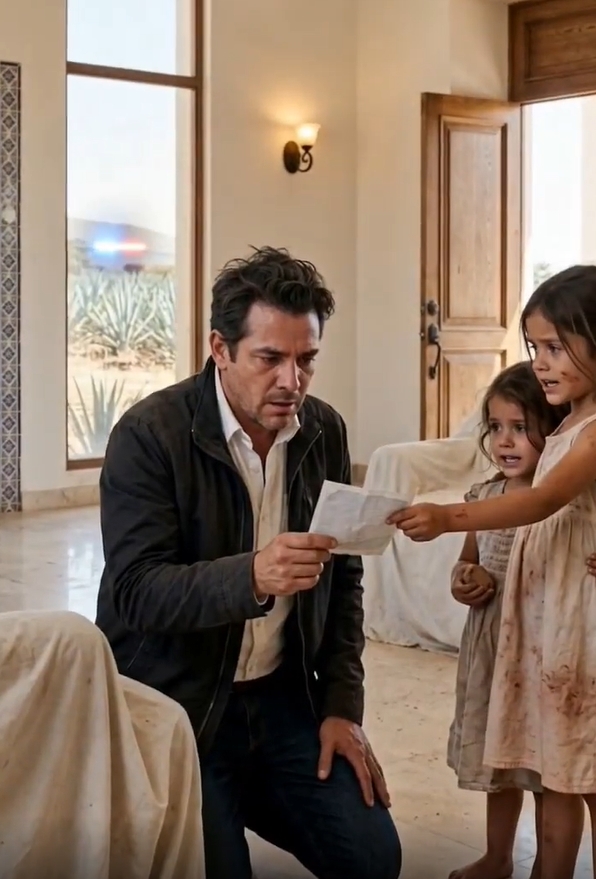
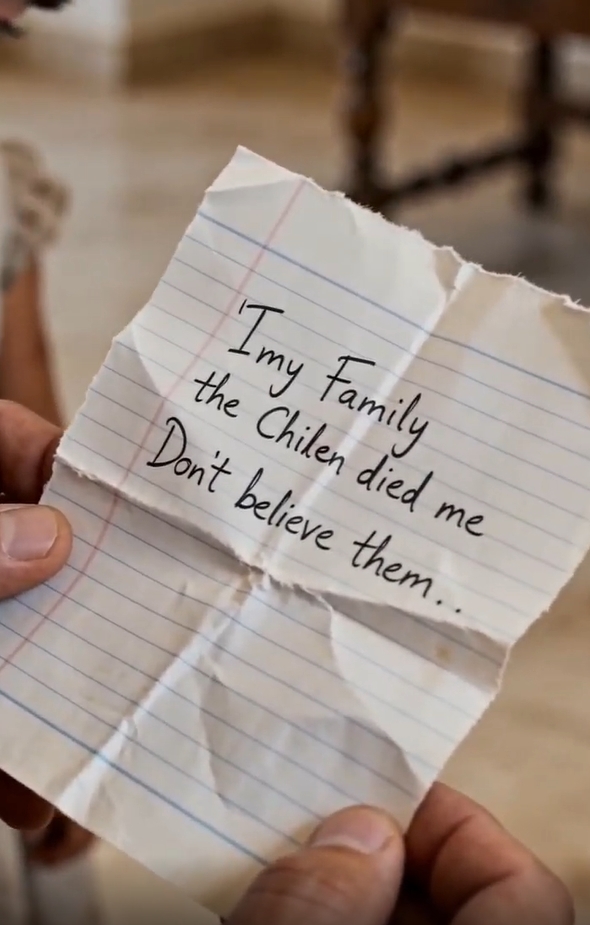
Slowly, carefully, Mateo turned the photograph over, his thumb brushing against the worn edges of the paper. Written in Betty’s unmistakable, elegant cursive were the words that would shatter his reality forever: “If my family tells you the children died with me… don’t believe them.” The breath left his lungs in a sharp gasp as the horrific truth finally clicked into place. The two little girls—the baby Betty had been carrying in the photo, and the quiet child standing right next to him—were the very daughters he had spent years mourning after being told they perished in childbirth alongside their mother. Betty’s powerful, wealthy family had lied to him from the very beginning, weaving a cruel tapestry of deception to keep his own flesh and blood away from him out of spite and prejudice.
Looking up from the paper, Mateo saw the little girl in a completely new light, recognizing the subtle arch of Betty’s eyebrows and the deep, soulful brown of his own eyes reflected back at him. She was not a stranger guiding him through a ruin; she was his daughter, and she had led him exactly where he needed to be. A second, older girl stepped out from the shadows of the hallway, her posture cautious but her resemblance to Betty absolutely striking. The protective walls the family had built around their lie were crumbling, exposed by a mother’s foresight and a scrap of paper that refused to decay.
The fear that had gripped the children began to melt away as Mateo opened his arms, offering them a warmth they had been denied for far too long. They moved toward him hesitatingly at first, then buried themselves in his embrace, weeping tears of relief that mingled with his own. The years of agonizing grief and hollow loneliness that had defined Mateo’s life vanished in that singular, profound moment of reunion. He knew the road ahead would involve a fierce battle to reclaim them legally and confront the people who had stolen his family, but looking down at his daughters, he felt an indestructible resolve. Holding them tightly against his chest, Mateo led his girls out of the dark, abandoned house and into the brilliant, welcoming sunlight, finally bringing his family home.