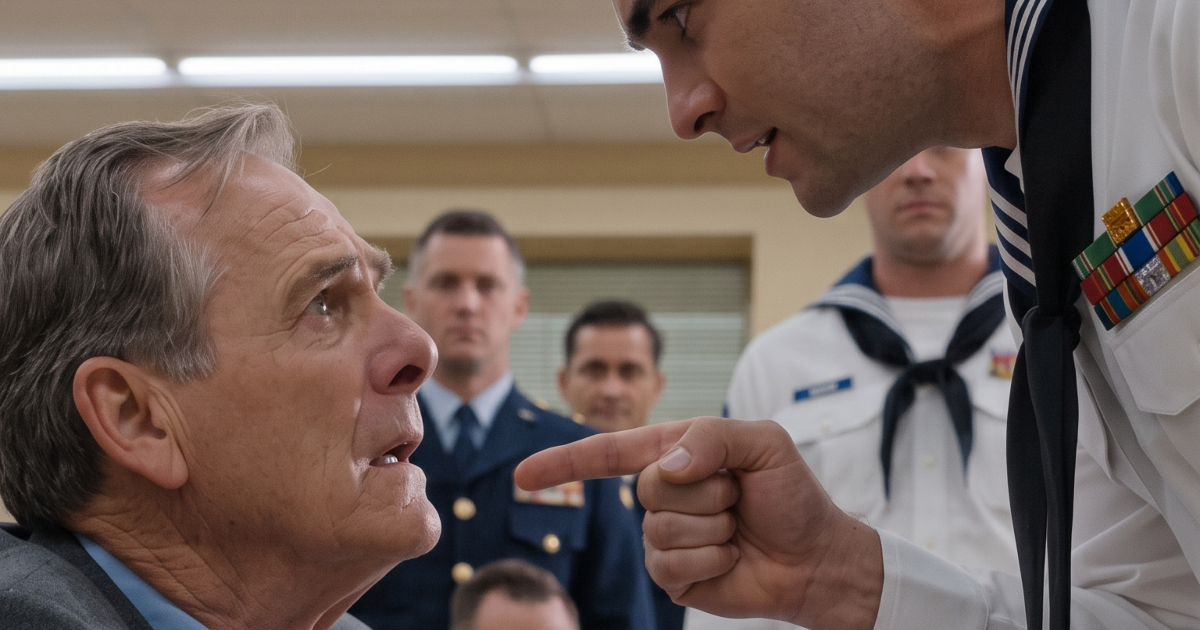
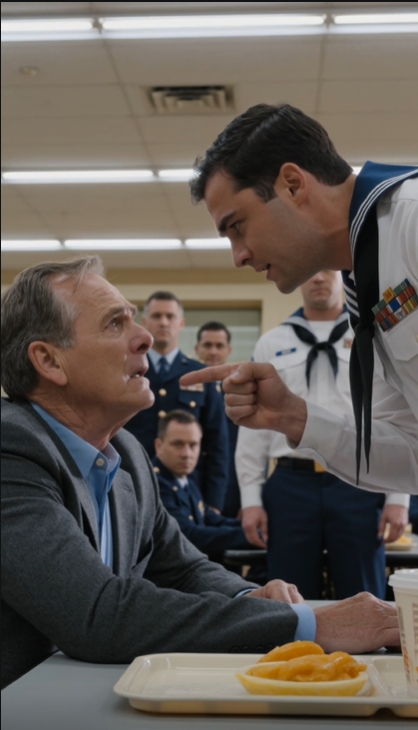
The cafeteria fell silent the moment the young Navy serviceman stepped toward the old man’s table. At first, no one understood what was happening. Soldiers in uniform stood frozen with trays in their hands as the sharp clatter of plates, voices, and chairs faded into a heavy silence. The young man leaned over the table, his face pale with anger and pain.
“Look at me,” he said. The elderly man slowly raised his eyes, his hands trembling around a metal spoon and his lower lip shaking as if he were trying to remember something buried too deep. He stared at the serviceman’s face, confused and frightened, and whispered, “Do I know you?”
The words hit the young man harder than any insult could have. For a moment, his anger broke, and grief showed through. He reached into the pocket of his uniform and pulled out an old black-and-white photograph, worn at the edges from years of being folded and unfolded, and placed it on the table between them. In the photo, a much younger version of the elderly man stood beside a woman holding a small baby. On the back, in faded handwriting, was a date from forty years ago.
“You left me behind,” the serviceman said, his voice shaking. The spoon slipped from the old man’s fingers and struck the plastic tray with a loud metallic sound. His eyes widened as he looked from the photograph to the young man’s face, tears filling his eyes before he even spoke, gasping, “No… impossible.”
The young man’s jaw tightened. “My mother told me you abandoned us. She said you chose your country, your career, everything except us. I grew up thinking my father walked away.” The old man pressed a trembling hand to his chest. For years, the world had believed he was only a forgotten veteran—a quiet man who ate alone, spoke little, and carried nothing but sadness in his eyes. But now, in front of everyone, the truth was rising to the surface.
He reached inside his gray blazer and pulled out an old yellowed envelope. His hands shook so badly that the young serviceman almost grabbed it from him, but he stopped himself. The old man opened it slowly and took out a document stamped in bold red letters: CLASSIFIED. “I was ordered to disappear,” the old man said. “They told me your mother and child were dead. They showed me papers. They buried my life before I could even fight for it.”
The young man stared at him, unable to breathe. The old man unfolded another page, revealing a long list of search records, letters returned unopened, and private investigation notes. At the bottom was the same name the young man had worn his whole life. “I searched forty years,” the old man whispered.
The anger drained from the serviceman’s face. His hand slowly moved to the photograph, then to the old man’s shoulder. All the years of hatred, loneliness, and unanswered questions collapsed into one unbearable truth: neither of them had abandoned the other. The elderly man began to cry openly, no longer caring who watched. The young serviceman sat down beside him, still stunned, still hurt, but no longer alone.
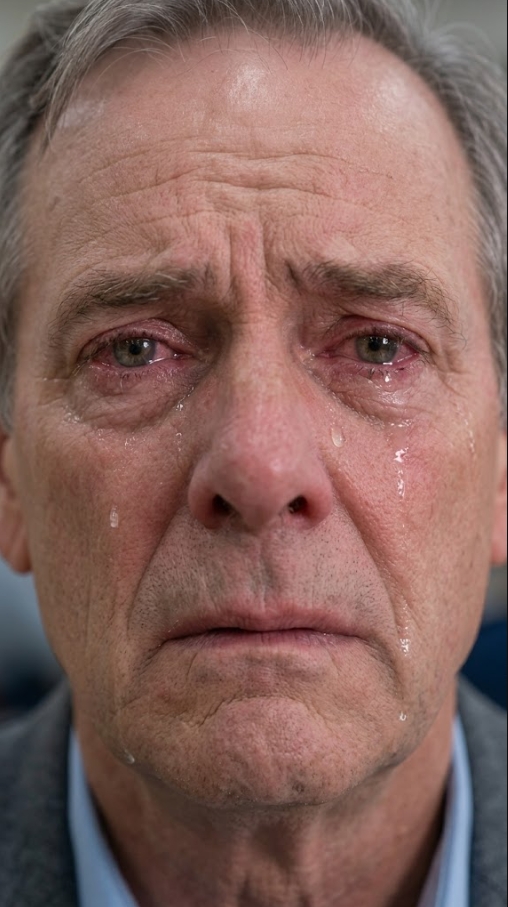
For a long moment, neither spoke. Then the young man took the old photograph, placed it gently between them, and said quietly, “My name is Caleb.” The old man covered his mouth, tears running down his cheeks as he whispered, “I know. I gave you that name.”
Caleb closed his eyes as the last wall between them finally broke. He leaned forward, and the old man wrapped his arms around the son he had spent a lifetime searching for. Around them, the soldiers stood in silence, witnessing not a confrontation, but the return of a family that had been stolen by secrets and time. And for the first time in forty years, the old man did not eat alone.