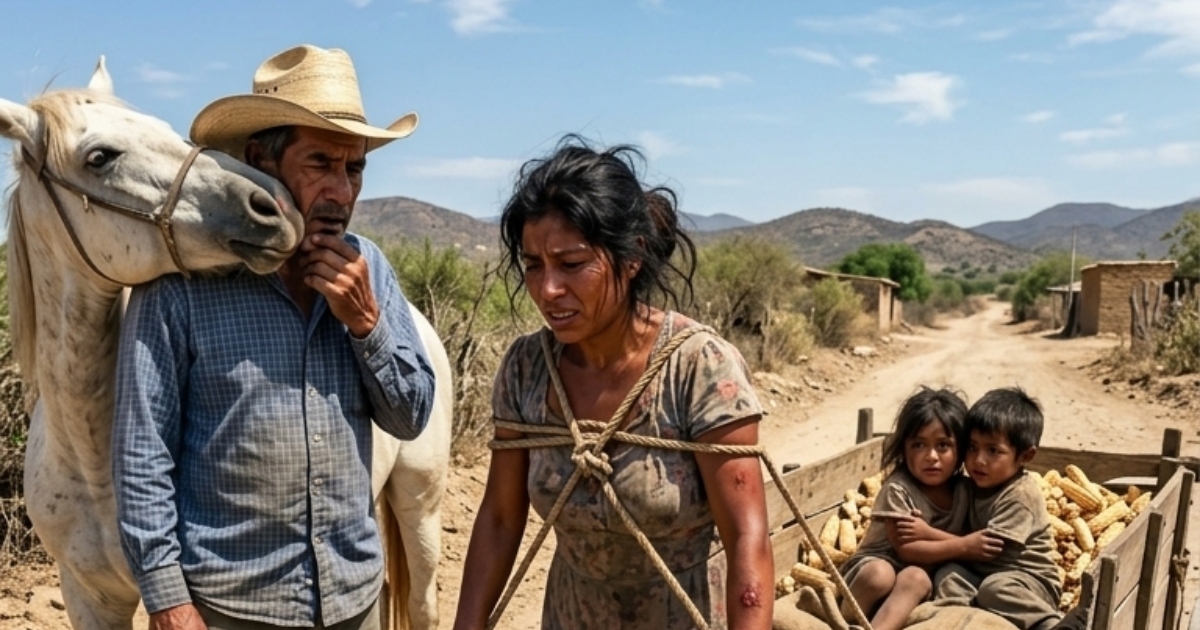
Under the harsh midday sun, on a dusty rural road, a drama hidden from outside eyes was unfolding. A tired, sweat-covered Mexican woman was pulling a heavy wooden cart with all her might, her little children sitting inside. Sweat rolled down her forehead in big drops, and her breathing was heavy and ragged.
It seemed the woman’s strength was completely spent, but she stubbornly kept moving forward across the scorched earth. Suddenly, from the left side of the road, a middle-aged man in a straw hat stepped closer, holding a white horse by its reins. Deep, hidden sadness could be read in his eyes.
He looked at the exhausted mother, then at the children in the cart, and his heart sank. The man took a step toward her and spoke softly, yet clearly: “I will help you carry the children.”
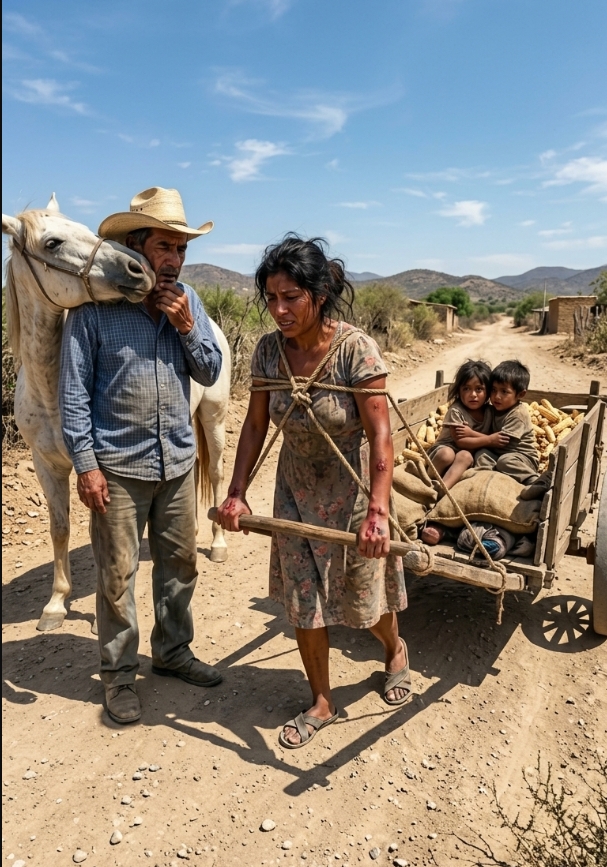
The woman stopped dead in her tracks. Breathing heavily, she looked at the stranger with deep suspicion mixed with fear. In this harsh world, nobody did anything for free, and she was already mentally calculating the impossibly high price she would have to pay for such generosity.
Every moment of silence between them felt tangible, thick with dust and heat. Finally, looking him straight in the eyes, she asked: “What do I owe you?”
The man didn’t answer right away. His face turned intensely serious, and his eyes seemed to glisten with barely contained tears. Memories he had kept buried deep inside for so long came rushing back like an avalanche.
He remembered his past life, where happiness had once lived. He remembered the wife he had lost many years ago, who left a gaping void in his soul. And, most painful of all—his grown daughter. A few years ago, after a bitter argument, she had left home, taking his beloved grandchildren with her, and never returned.
All these years, he had lived in absolute, ringing loneliness within the empty walls of his house. And now, standing right before him was a woman desperately fighting for the lives of her little ones—just like his own daughter used to do.
The man took a deep breath, his voice trembling but firm. He looked at the frightened mother and said: “I had a daughter too… But I have one condition.”
The woman’s eyes instantly went wide with horror and panic. Her pupils dilated, and her heart pounded wildly in her chest. “One condition”—those words sounded like a death sentence to her, making her suspect the absolute worst.
She froze, paralyzed by a terrifying choice, looking down at his extended hand, then back up at his face. The pause stretched on, the tension peaked, and the world around them seemed to stop existing.
The man noticed her immense fear and hurried to continue, turning his hand palm up: “My condition is—let me become a part of your life. My house is empty, and my heart is broken. Let me help you raise them and be the grandfather they don’t have.”
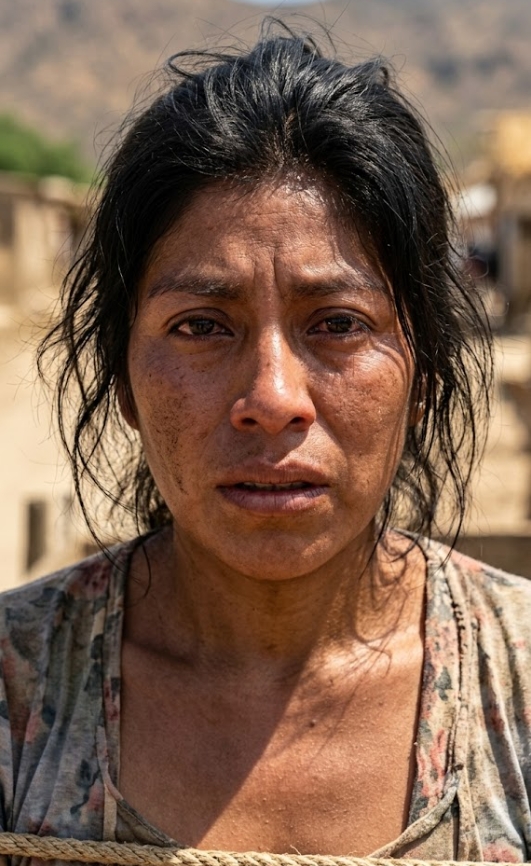
The horror on the woman’s face slowly melted into utter astonishment. The heavy wooden handle of the cart slipped from her weakened hands. She looked at this lonely man and saw in his eyes not a threat, but a soul just as wounded and searching for warmth as her own.
Tears of relief poured from her eyes, washing away the road dust. She took a step forward and timidly placed her palm into his broad, calloused hand. On that sweltering afternoon, in the middle of a deserted road, two lonely people found what they had been searching for more than anything else in the world—a family.