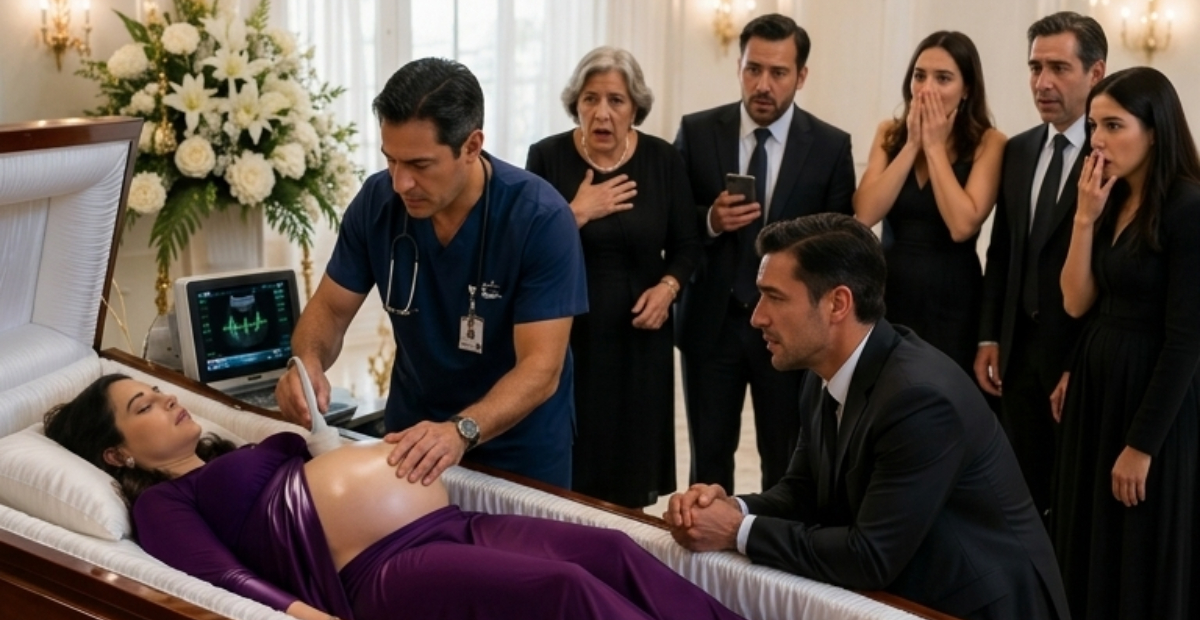
The chapel was so quiet that the sound of soft footsteps echoed across the polished floor. Family members sat shoulder to shoulder, clutching tissues and staring at the white lilies surrounding the closed casket. No one could believe that Margaret Ellis, a lively retired schoolteacher known for her quick smile and endless patience, was gone.
She had suffered what appeared to be a sudden cardiac arrest two days earlier. Despite the efforts of paramedics and hospital staff, she had been declared dead. The paperwork had been completed, arrangements had been made, and now loved ones had gathered to say their final goodbye.
Just before the service was scheduled to begin, the funeral director received a call from the hospital. A physician explained that a small discrepancy had been discovered while reviewing Margaret’s records. It was likely nothing significant, but because of the unusual circumstances surrounding her collapse, they requested permission to perform one final external medical examination before the burial.
The family, though confused, agreed.
An ambulance quietly transported Margaret back to the hospital. Most relatives assumed it was simply a formality that would delay the funeral by a few hours. No one imagined it would change everything.
In a private examination room, Dr. Daniel Brooks carefully checked her body. He wasn’t expecting a miracle. He simply wanted to verify that every detail of the diagnosis had been correct.
As he adjusted a monitoring device against her chest, something caught his eye.
A barely noticeable twitch.
He froze.
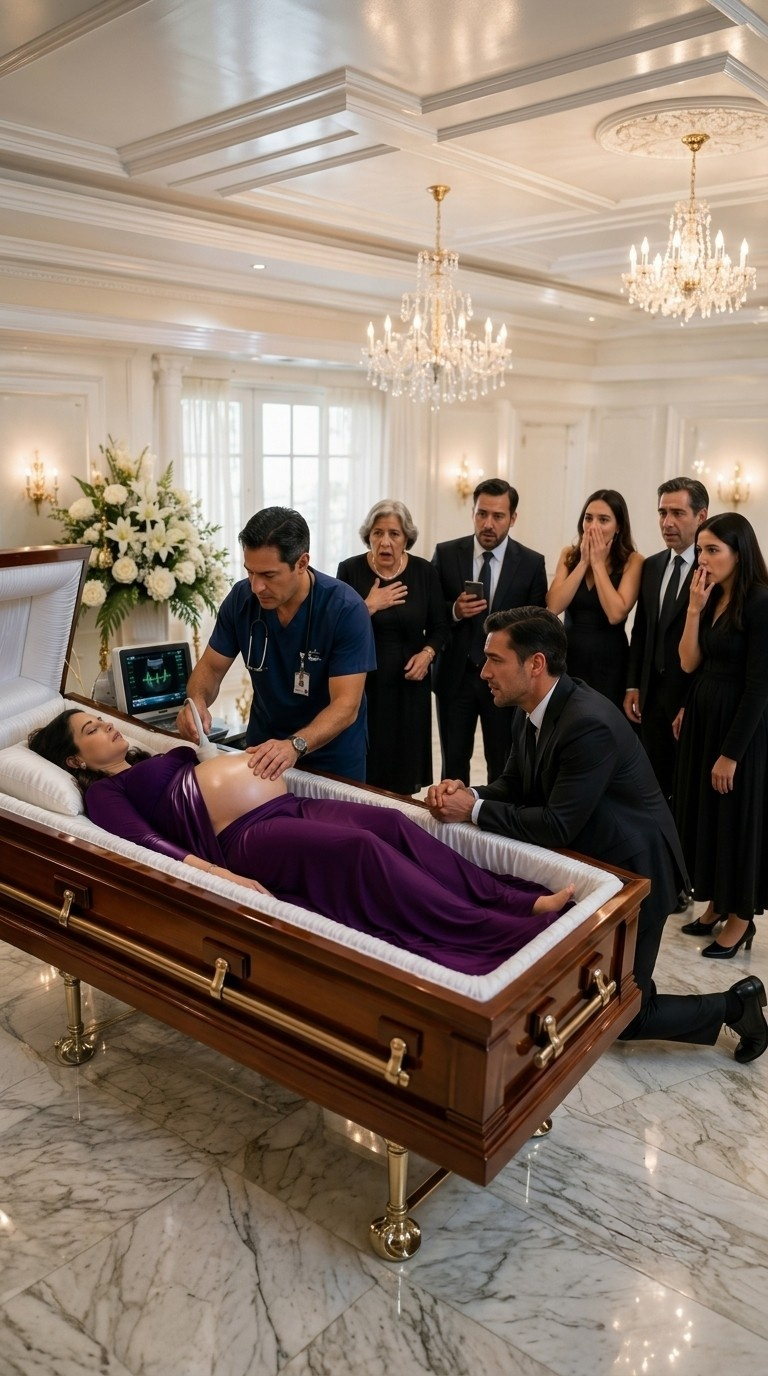
For several seconds the room was completely still. Then he saw it again—a tiny movement in one finger.
His heart raced. He immediately called for assistance.
Within moments, nurses rushed in and connected Margaret to advanced monitoring equipment. A faint electrical rhythm appeared on the screen. It was incredibly weak but undeniably present.
She wasn’t dead.
The emergency team acted without hesitation. Margaret was placed on life support, warmed carefully, and given medication to stabilize her condition. Hours later, her heartbeat grew stronger, and by the following morning she took her first independent breath.
The news spread through the hospital like wildfire.
Her family arrived expecting an explanation. Instead, they found themselves standing beside her hospital bed, watching her eyelids slowly open.
Tears filled the room.
“I thought… I was dreaming,” Margaret whispered weakly.
No one could speak. Her daughter simply held her hand and cried.
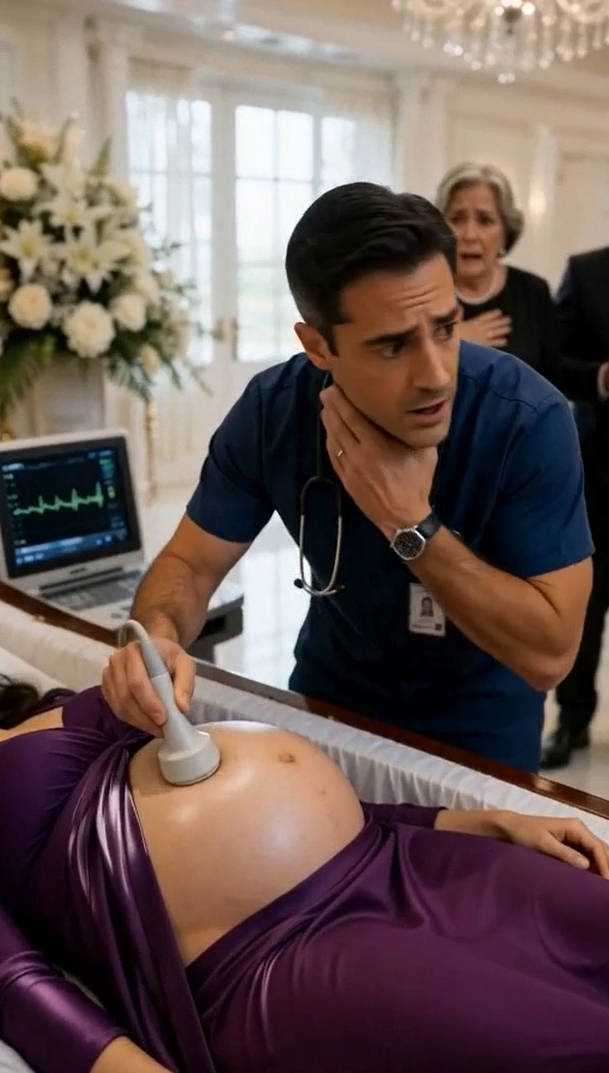
The medical staff launched a thorough investigation. After reviewing every test, specialists concluded that Margaret had experienced an extraordinarily rare combination of severe hypothermia and a temporary metabolic condition that had slowed her body’s functions to such an extreme level that her pulse and breathing became almost impossible to detect with the equipment available during the initial emergency. Though incredibly uncommon, documented medical cases had shown that such situations could occur.
Dr. Brooks couldn’t stop thinking about the tiny movement that had caught his attention. Had he looked away for even a moment, the outcome might have been very different.
Margaret spent several weeks recovering with physical therapy and close observation. Each day she became stronger, gradually returning to the cheerful woman her family had always known.
Months later, instead of gathering for a funeral, her relatives organized a celebration in the same chapel where they had nearly said goodbye forever. This time the flowers decorated tables filled with photographs from Margaret’s life, and laughter replaced grief.
Standing before her family, Margaret smiled warmly.
“I’ve learned something,” she said. “Every ordinary morning is a gift. We spend so much time planning for tomorrow that we forget today is already precious.”
No one in the room disagreed.
Dr. Brooks attended quietly from the back, grateful that one small instinct had led him to take a closer look. For the Ellis family, what began as their darkest day became a reminder that medicine, while remarkably advanced, still demands humility, patience, and careful attention.
The farewell that everyone expected never happened. Instead, it became the beginning of a remarkable second chance—one that Margaret embraced with gratitude for the rest of her life.