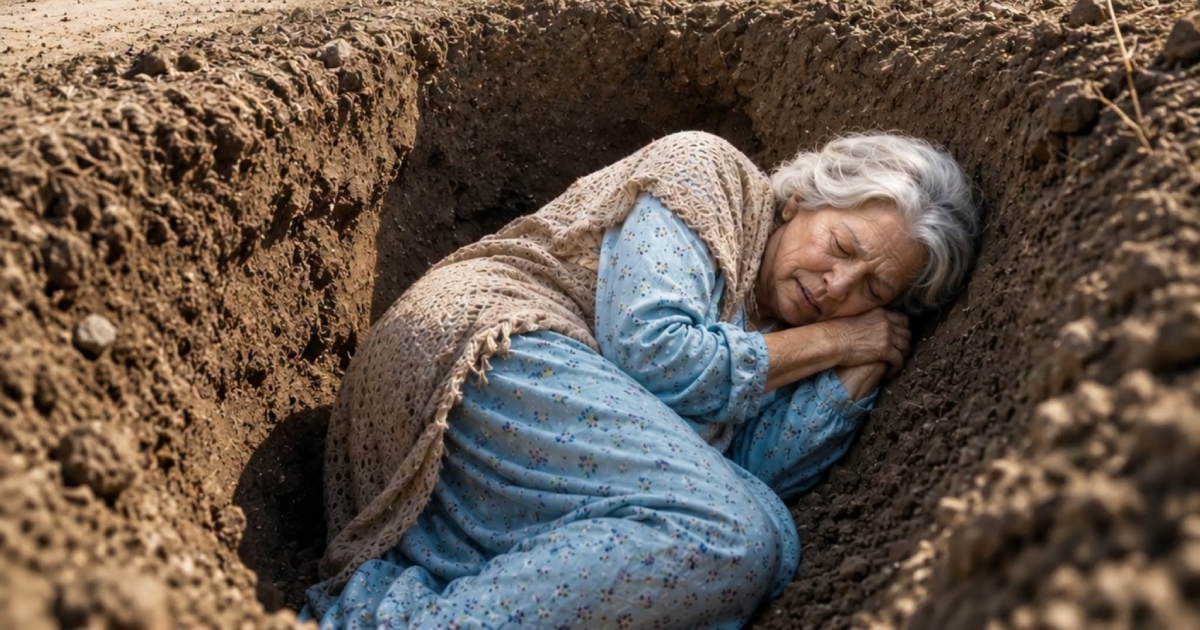
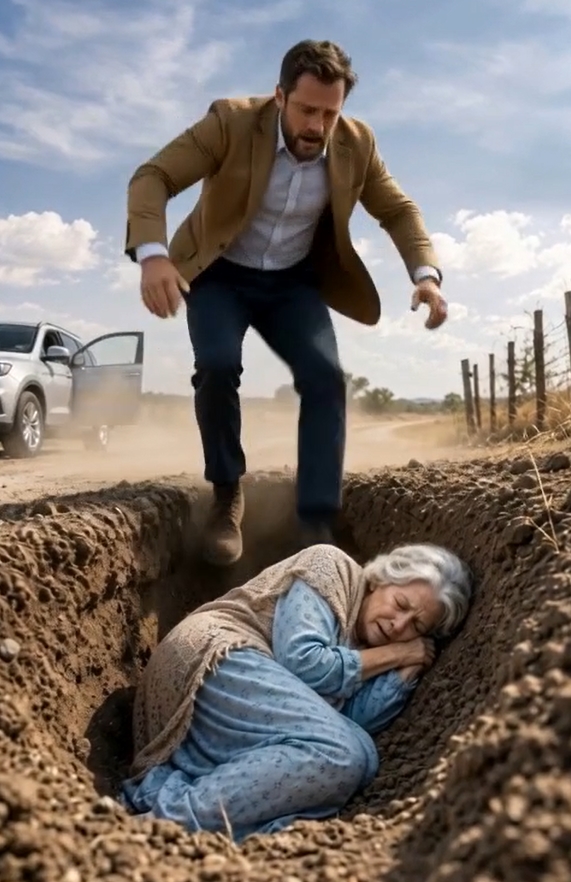
The road had been closed for weeks while a new drainage system was being built, leaving behind piles of dirt and a long trench that stretched along the edge of a quiet countryside lane. Hardly anyone passed through anymore, which was why Daniel slowed his truck the moment he noticed what looked like a blanket lying inside the freshly dug ditch.
At first he assumed someone had dumped old bedding there. Then he saw a hand.
His heart nearly stopped.
Daniel jumped from the truck and scrambled down into the trench. Curled against the cool earth was his seventy-eight-year-old mother, Eleanor. She was fast asleep, wrapped in her old coat as if she had simply chosen the place for an afternoon nap.
“Mom!” he shouted, gently shaking her shoulders. “Wake up! What are you doing here?”
She opened her eyes with a frightened gasp and looked wildly around before recognizing him. Relief flooded her face, but it lasted only a second before she burst into tears.
Daniel helped her climb out of the trench and wrapped her in a blanket from his truck. She trembled so hard that she could barely hold the cup of warm tea he handed her.
“I’ve been looking everywhere for you,” he said softly. “Please tell me what happened.”
She shook her head.
“You wouldn’t believe me.”
“I don’t care. Just tell me.”
For a long moment she stared at the empty road.
Finally, in a whisper, she said, “Someone has been trying to convince me that I don’t belong in my own home.”
Daniel frowned.
Over the previous few months, Eleanor had mentioned strange things—a chair moved to a different room, family photographs disappearing and returning, lights switched on in the middle of the night. Daniel had quietly assumed age and loneliness were affecting her memory. Her doctor had found no signs of dementia, but everyone dismissed the stories anyway.
“I thought I was imagining it too,” she continued. “Until I heard them.”
“Them?”
“The men.”
She explained that the previous evening she had overheard two workers talking outside her garden fence. They believed the old farmhouse would soon be sold because its elderly owner “wouldn’t be around much longer.” One of them laughed and said that if they kept frightening her, she’d probably move into a care home on her own.
Eleanor hadn’t slept all night.
Every unfamiliar sound convinced her someone was outside. At dawn she left the house, terrified that the men would return. When she reached the deserted construction site, she climbed into the trench, thinking no one would find her there. Exhaustion finally overcame her, and she fell asleep.
Daniel felt sick.
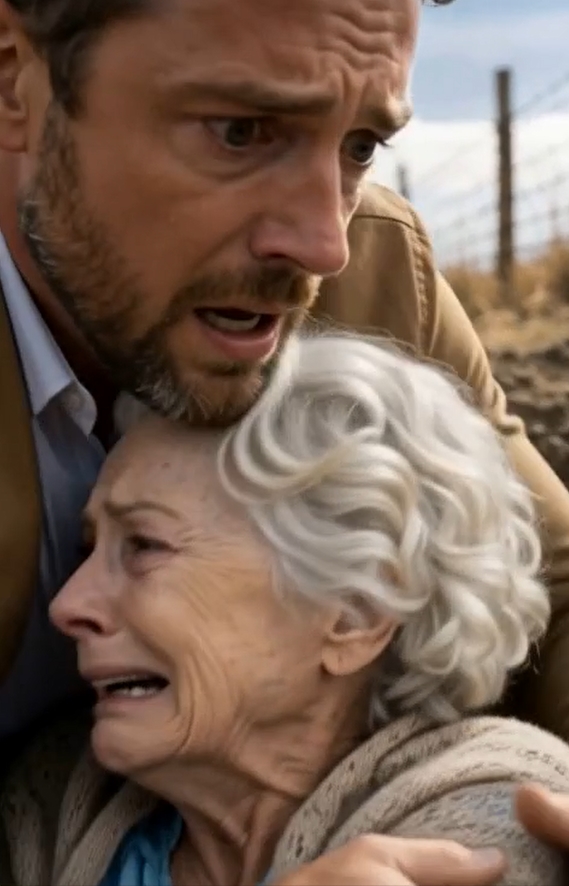
His mother’s fear hadn’t come from confusion. It had come from hearing something no one should ever hear.
He drove her home, then immediately contacted the construction company. After reviewing work schedules and speaking with employees, the site manager identified two temporary contractors who admitted they had made cruel jokes about “scaring the old woman off” because a developer had shown interest in purchasing nearby land. They insisted they had never intended to act on the comments, but the company dismissed them on the spot and reported the incident to the authorities. Witnesses later confirmed the conversation Eleanor had overheard.
Daniel also installed security cameras around the farmhouse, replaced the outdoor lighting, and began spending several evenings each week with his mother. Neighbors, shocked by what had happened, organized a small rotation of visits so she would never again feel isolated.
As the weeks passed, the fear slowly left Eleanor’s eyes. She returned to tending her roses, sitting on her porch, and waving to passing cars without nervously checking over her shoulder.
One evening, as the sun dipped behind the fields, Daniel apologized.
“I should have listened the first time you told me something felt wrong.”
Eleanor smiled gently.
“I know why you didn’t. Sometimes the truth sounds unbelievable until someone is willing to hear it.”
Daniel looked across the quiet road where the trench had long since been filled and paved over. The scar in the earth had disappeared, but it reminded him of something he would never forget: the deepest wounds are often the ones people dismiss because they cannot imagine them being real. From that day forward, he promised himself that whenever someone he loved said they were afraid, he would listen first—and doubt later.