
The chandeliers sparkled above a room filled with laughter, expensive gowns, and polished smiles. The annual charity gala at the Whitmore mansion had drawn the city’s most influential guests, all eager to be seen supporting a good cause. Crystal glasses clinked together as conversations floated through the grand ballroom, creating the illusion of warmth and generosity.
Standing quietly near the back of the room was Evelyn Brooks, an elderly woman who had spent more than thirty years working as the Whitmore family’s housekeeper before retiring. She had been invited by the family’s late patriarch years earlier and, after his passing, continued receiving an invitation each year. She arrived wearing her best navy-blue dress, one she had carefully pressed that morning, proud simply to be included.
Not everyone was pleased to see her.
Victoria Whitmore, the wealthy daughter-in-law who had taken over hosting the event, viewed Evelyn as an embarrassing reminder of the family’s past. Throughout the evening, she mocked the older woman with subtle comments that drew nervous laughter from a few guests while leaving others visibly uncomfortable.
Then, with dozens of people watching, Victoria crossed a line no one expected.
She grabbed a pitcher of ice water from a nearby table and poured it over Evelyn’s head.
The ballroom fell silent.
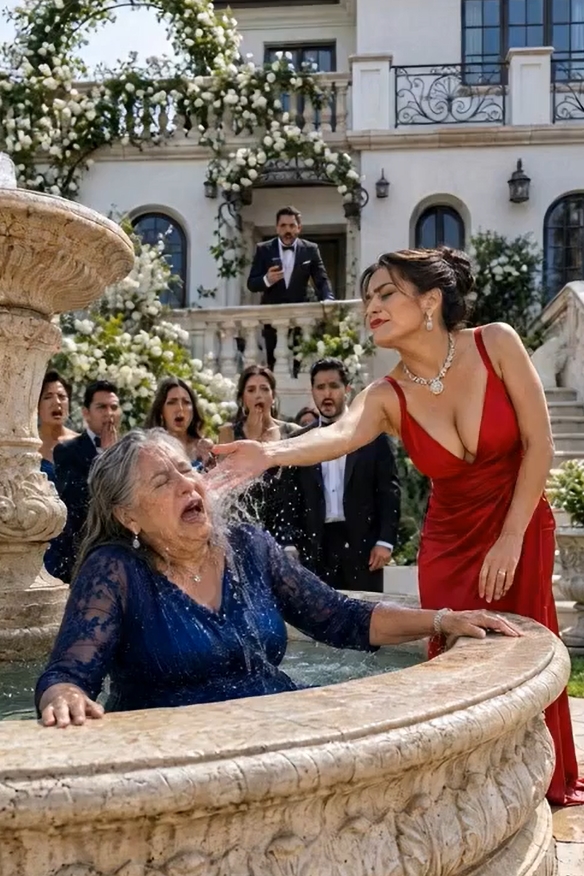
Water dripped from Evelyn’s silver hair onto the marble floor. She stood perfectly still, her hands trembling, too stunned to speak. A few guests looked away in shame. Others remained frozen, unwilling to challenge the woman who controlled so much wealth and influence.
Suddenly Evelyn staggered backward.
Her breathing became rapid and uneven. She clutched at her chest before collapsing onto the floor.
Panic instantly replaced the silence.
Several guests rushed toward her, but before anyone knew what to do, a man hurried through the crowd carrying a medical bag.
“Please move back,” he called.
It was Dr. Daniel Harper, a cardiologist who had arrived late after finishing an emergency hospital shift. He knelt beside Evelyn, quickly recognizing the signs of severe cardiac distress brought on by shock and stress. Calmly directing nearby guests, he began emergency treatment while someone called an ambulance.
After several tense moments, Evelyn gasped for air. Color slowly returned to her face.
The room released a collective breath.
As paramedics entered the mansion, Evelyn weakly lifted one hand and pointed directly at Victoria.
“She did this,” she whispered.
No one could pretend they hadn’t seen it.
Several guests immediately confirmed exactly what had happened. Others admitted that Victoria had been humiliating Evelyn throughout the evening. Multiple phones had recorded the incident from different angles.
Victoria’s confident smile disappeared.

She insisted it had only been a joke, but her words sounded hollow against the overwhelming evidence surrounding her.
Days later, the videos spread across social media. Public outrage was swift. Sponsors withdrew from Victoria’s business ventures, charities distanced themselves, and several members of the Whitmore family publicly condemned her behavior. Facing mounting pressure, she resigned from the family’s charitable foundation.
Evelyn, meanwhile, recovered well after receiving treatment at the hospital. Reporters soon learned that, despite modest means, she had quietly spent years volunteering at food banks and mentoring young caregivers without ever seeking recognition.
The attention she received inspired thousands of people to donate to local charities in her honor. Former coworkers, neighbors, and even strangers sent letters thanking her for a lifetime of kindness.
One week later, the Whitmore family hosted another gathering at the mansion. This time there were no cameras, no speeches, and no elaborate decorations. The event was held simply to apologize to Evelyn.
The family’s eldest grandson presented her with a framed photograph of her standing beside his grandfather decades earlier, smiling proudly in the mansion’s garden. Beneath it was a simple inscription:
“Respect is never measured by wealth, but by the way we treat those who have shown us kindness.”
Evelyn smiled through tears as the room stood and applauded—not because she had become famous, but because dignity had finally been restored.
For many who witnessed that unforgettable evening, the image they remembered most was not the cruel act that nearly ended in tragedy. It was the quiet strength of an elderly woman who refused to let humiliation define her, and the moment an entire room learned that true character reveals itself not in comfort, but in the choices people make when someone vulnerable needs them most.