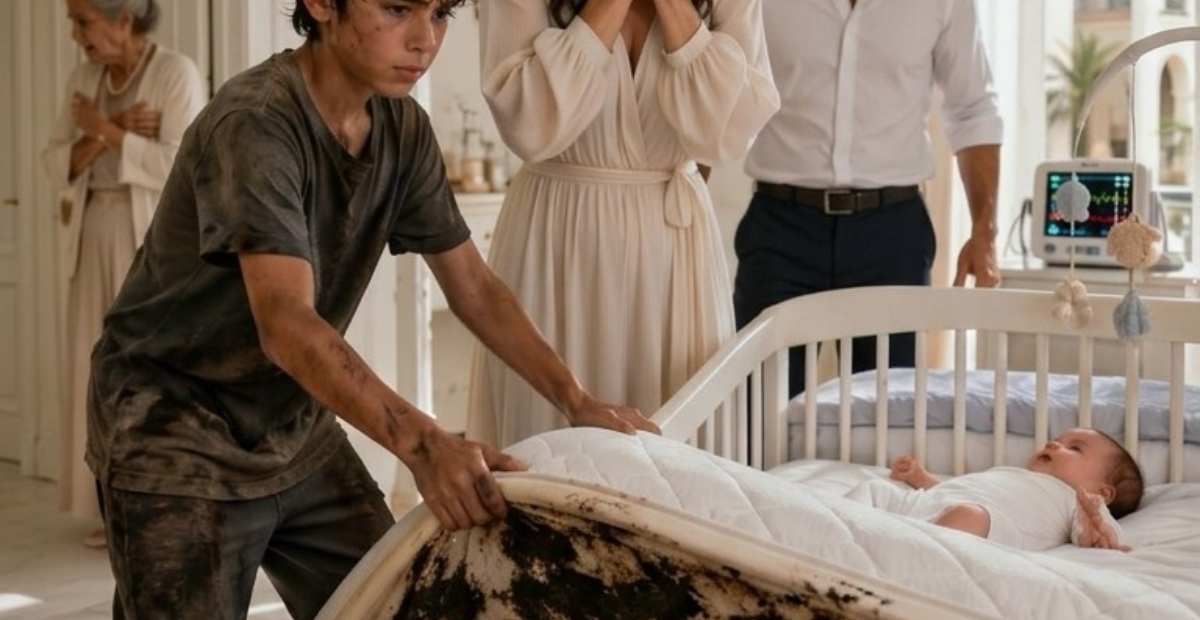
The rain had turned the yard into a slick field of mud, and the teenage boy looked like he had been dragged straight out of it when he stepped into the house. His shoes left dark prints across the hallway as he hesitated near the bedroom door, breathing hard as if he had run for miles instead of just crossed the garden. Inside, the family was gathered around the crib, tense and confused, because something about the baby had made them call him in the first place.
It had started as an ordinary afternoon. The baby had been crying unusually hard, not stopping even when fed, rocked, or checked for fever. The mother had insisted something felt “off,” something she couldn’t explain. That was when the teenage boy, the only one small and quick enough to check under furniture and tight spaces, had knelt down beside the crib. He had lifted the mattress just slightly, expecting maybe a toy, maybe a dropped pacifier.
Instead, he froze.
At first he didn’t speak. His fingers tightened around the edge of the mattress, knuckles whitening as if he had touched something alive. Slowly, he pulled his hand back and stared at it, then at what lay beneath. Whatever he had seen made him go pale under the layer of mud and rain still clinging to his skin.
“Don’t look,” he finally said, voice shaking. It wasn’t loud, but it cut through the room like a blade. “Nobody look under there.”
The father stepped forward immediately, demanding an explanation, but the boy only shook his head, backing away from the crib as if it had become dangerous. The baby’s crying stopped suddenly at that exact moment. The silence that followed was worse than the noise had been.
Something spread through the room then—fear, sharp and immediate. The mother clutched the edge of the crib, her eyes darting between her son and her baby, while the father reached for the mattress anyway, refusing to be scared by a teenager’s panic. The boy shouted again, louder this time, desperate.
“I said don’t—!”
But it was too late.
The father lifted the mattress.
For a second, nothing happened. Then the room went still in a way that didn’t feel natural, as if even the air had stopped moving. Under the mattress was not what anyone expected—not a creature, not a weapon, not anything alive. It was a small, old-looking metal device, barely larger than a deck of cards, taped carefully to the wooden frame of the crib. A faint light blinked on its surface.
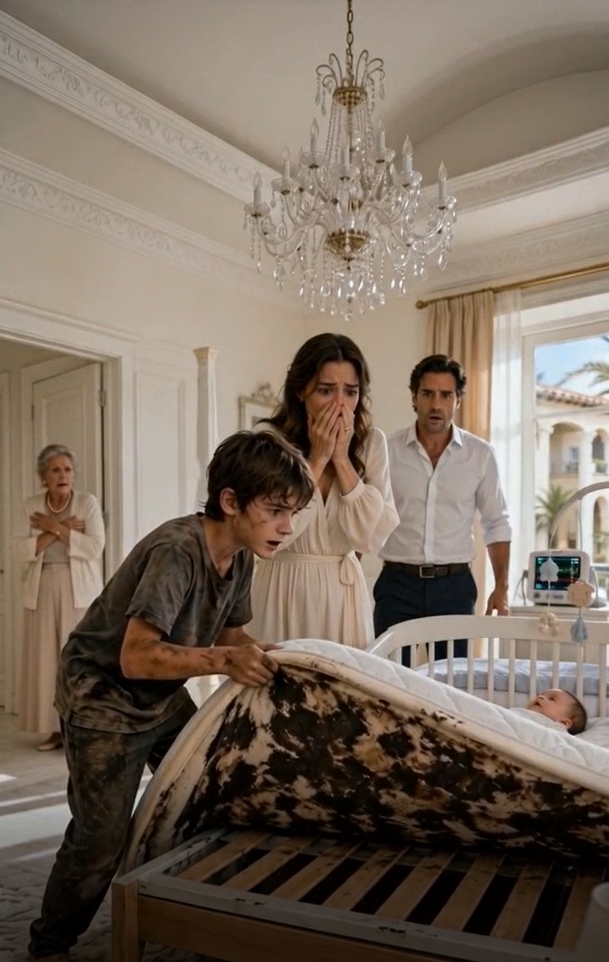
No one spoke. The father’s hand froze mid-air. The mother covered her mouth. The teenage boy stepped back as if confirming what he had already understood.
“It’s a tracker,” he said quietly. “Or something like it. I’ve seen one before… on the news.”
The baby, who had been silent, suddenly stirred again. But this time, instead of crying, it laughed. A soft, cheerful sound that didn’t match the fear in the room at all. All eyes snapped toward the crib.
The baby was looking directly at the device.
Then, impossibly, it reached down through the slats and touched the mattress above where the device was attached. The blinking light stopped.
The room shifted again, but not into relief—into deeper confusion. The father tore the device free, hands trembling now, turning it over as if it might explain itself. On the underside was a small inscription, worn but readable: not a manufacturer’s label, but a handwritten set of initials and a date from years ago.
The mother gasped. She knew those initials.
They belonged to her younger brother, the uncle who had disappeared more than a decade earlier under circumstances the family never fully discussed.
Suddenly, the memory of an old argument, a missing inheritance dispute, and a broken family connection rushed back into the room like a flood. The device hadn’t been placed recently. It had been there far longer than the baby had been alive.
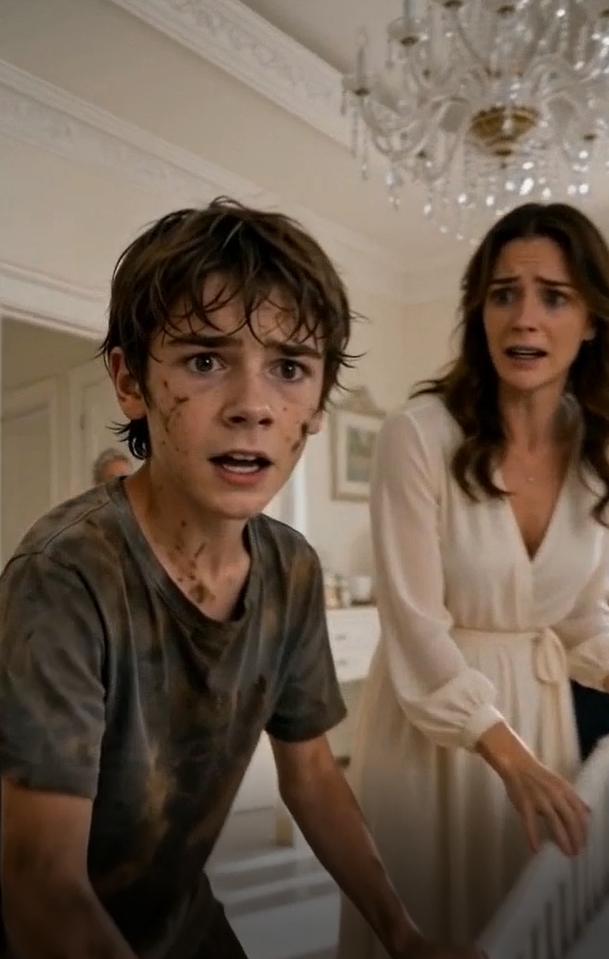
And then the baby laughed again, louder this time, pointing not at the device, but at the muddy teenage boy.
The boy went still.
Because he now remembered something he hadn’t told anyone. Earlier that week, playing in the attic during a storm, he had found an old box of forgotten belongings. Curious, he had taken one item out—a small device he thought was broken. He had played with it for a moment before dropping it somewhere downstairs in the house.
He hadn’t known where it landed.
Until now.
The truth unraveled quickly after that. The device wasn’t a tracker at all, but part of an old home monitoring system the missing uncle had once built as a harmless experiment, designed to alert when the crib was moved or shaken. It had been deactivated years ago, but a backup battery had somehow survived, reactivating when disturbed.
The baby’s laughter wasn’t eerie—it was recognition. The system had once been triggered by the uncle himself when he had visited years ago, and something in the child’s memory, or instinct, responded to the familiar signal.
By the time the explanation settled in, the fear in the room had drained away, replaced by an exhausted silence. The father slowly set the device down on the table. The mother sank into a chair, shaking but relieved. Even the teenage boy exhaled, realizing his muddy hands had set off a chain of misunderstanding built on old secrets and coincidence.
Outside, the rain finally stopped.
Inside, the baby reached up again, this time simply yawning before drifting off to sleep, as if nothing had ever happened at all.