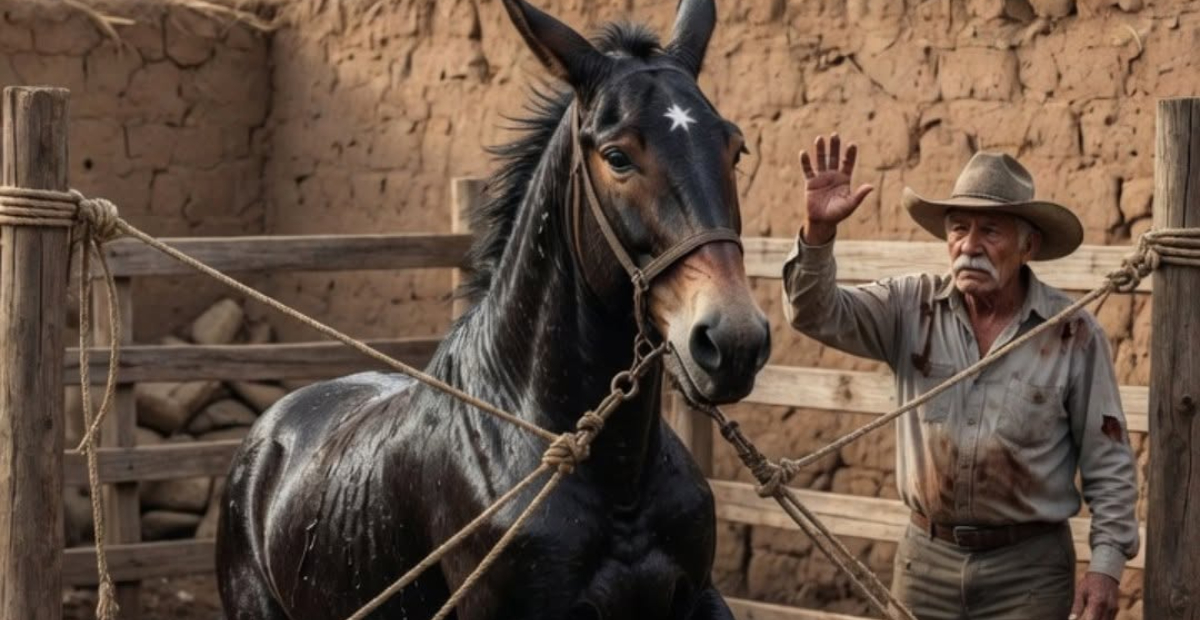
Panic had already taken over the ranch. The black horse—known as Midnight—had broken three ropes, kicked a section of the corral loose, and injured one of the workers who tried to get too close. Every experienced hand on the ranch had tried something: calming voice, feed, distance, even pressure techniques meant for highly trained stallions. Nothing worked. Midnight wasn’t just aggressive; he was in a state of pure, uncontrollable terror, striking out as if fighting something invisible.
The ranch owner finally stepped back, exhausted and defeated. “We’ve lost him,” he muttered, as the horse reared again, eyes rolling with panic. Dust filled the air, and for a moment it seemed like the animal might seriously hurt himself or someone else.
Then everything changed.
Midnight suddenly froze.
It wasn’t gradual. It was instant, as if someone had cut the tension inside him. His hooves lowered slowly, his breathing shifted, and his head turned sharply toward the edge of the ranch. Every person followed his gaze, expecting danger—expecting another trigger.
Instead, they saw a single figure walking toward the corral.
No weapons. No tools. Just calm, steady steps through the dust.
The ranchers frowned in confusion. “Who is that?” someone whispered again, but no one answered. What made it worse was Midnight’s reaction. The horse didn’t snort, didn’t strike, didn’t retreat. He simply stared, frozen, as if trying to confirm something he thought was impossible.
The stranger stopped at the fence.
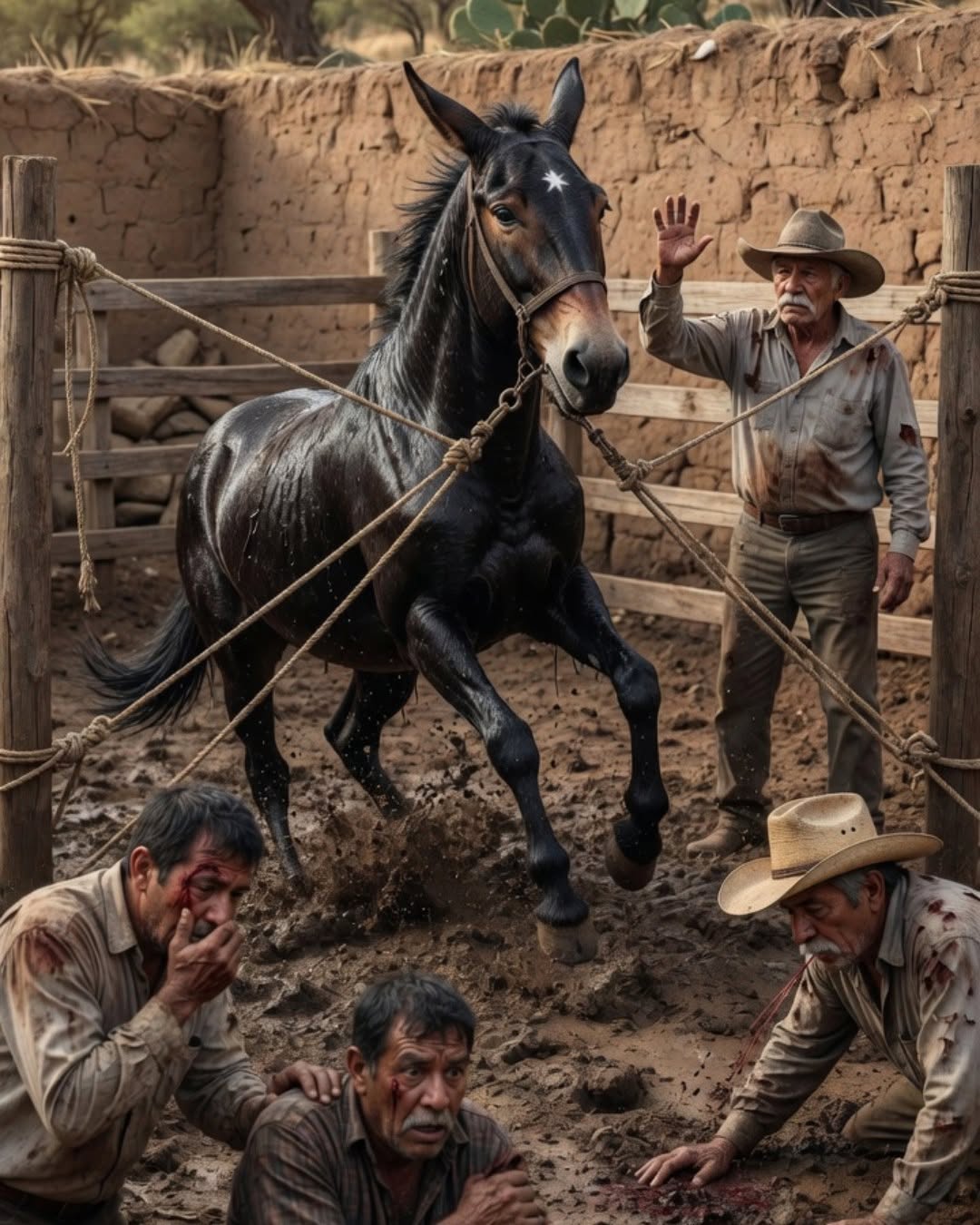
He looked older than most of the workers expected—weathered hands, worn jacket, and a quiet posture that didn’t match someone stepping into a dangerous situation. But what stood out most was his eyes. They weren’t afraid. They were familiar.
Midnight took one careful step forward.
Then another.
And suddenly, the truth hit the ranch owner like a memory he had tried to forget.
“Wait…” the owner whispered. “That’s not a stranger.”
The man at the fence slowly reached into his pocket and pulled out a small, worn whistle made of wood. The moment it appeared, Midnight’s entire body shifted. The violent tension drained from him, replaced by a shaky, emotional stillness.
One of the ranch hands shook his head. “That’s impossible… he doesn’t respond to anything like that.”
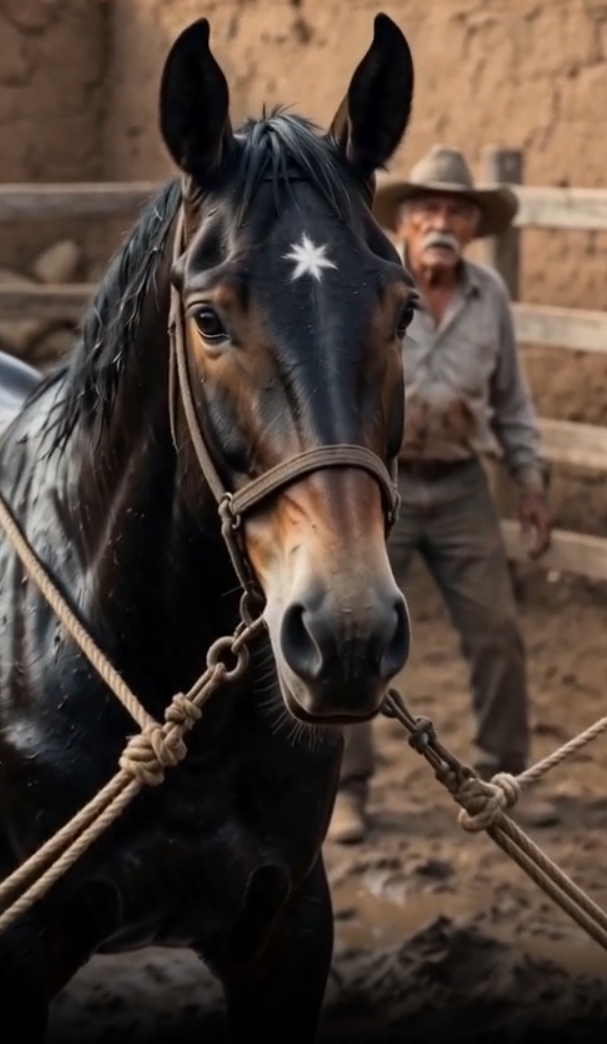
But the owner knew better now. “He does… if it’s him.”
The man finally spoke, his voice low but steady. “Easy, boy,” he said.
And Midnight—who had thrown men twice his size and shattered fences—lowered his head like a tired child.
The explanation wasn’t supernatural. It wasn’t mysterious.
Years earlier, Midnight hadn’t been a ranch horse. He had been raised by this man, a former trainer who specialized in rehabilitating abused and abandoned horses. Midnight had been his first major rescue case, a horse saved from a brutal past involving illegal racing circuits. The man had been the only human Midnight ever trusted fully. But after an accident on the ranch and a forced sale, they were separated, and the horse’s trauma had only deepened over time.
The “uncontrollable rage” everyone saw wasn’t aggression—it was fear resurfacing after years of unresolved memory triggers. The sound of stress, the fencing, even the smell of certain ropes had brought him back to that old trauma.
And now, the missing piece of his memory had finally returned.
The trainer opened the gate slowly and stepped inside without hesitation. Midnight didn’t move away. Instead, he pressed his forehead gently against the man’s chest, trembling as years of fear finally broke into stillness.
The ranchers stood in silence, realizing the truth was far simpler—and far more human—than they expected. It wasn’t a miracle or a mystery creature that calmed the horse.
It was trust that had never truly disappeared.
Midnight had never been untamable.
He had just been waiting for the only person who ever made him feel safe to come back.