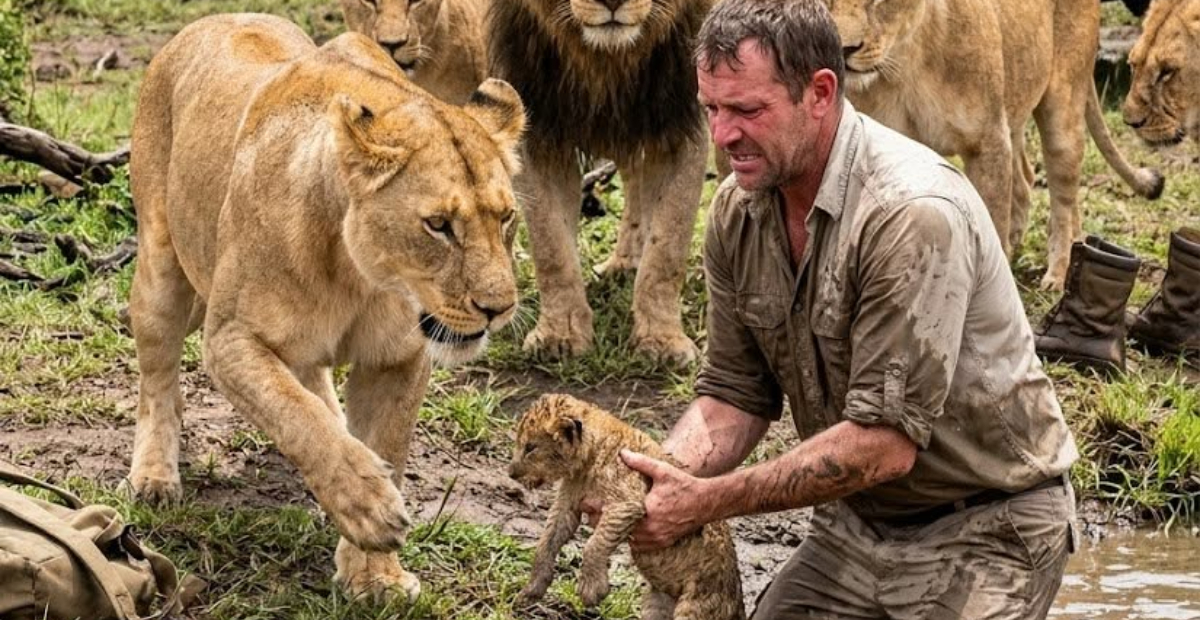
A wildlife rescuer risks everything to return a lost lion cub to its pride while terrified tourists watch in silence. For one brief moment, it seems his impossible act of courage has worked and the danger is finally over. But just as he turns to leave, something happens that changes everything.
The silence in the savannah feels unnatural, as if even the wind is holding its breath. The cub hesitates in the tall grass, its small body trembling between instinct and confusion. The pride does not immediately retreat as expected. Instead, the lions remain alert, watching every movement with tense, unreadable focus. The tourists, standing behind a fragile safety line of vehicles, barely dare to breathe, convinced that one wrong step will trigger an attack.
The rescuer slowly raises his hands, keeping his body low and non-threatening. He has done this before, but never with an audience this large, and never with a pride acting so strangely. The cub takes a hesitant step forward, then another, but instead of running directly to the lions, it circles slightly, as if unsure where it belongs. That is when he notices it again: a faint, worn marking near its neck, partially hidden by dust and fur. Not injury. Not natural. Something placed.
One of the tourists whispers that it looks like a collar tag, but broken. Another insists they saw a faint blinking earlier. The rescuer’s stomach tightens, but he does not move. The lions shift again, not in aggression, but in something closer to caution. The dominant male steps forward slowly, then stops, locking eyes with the cub. A low rumble rolls through his chest, not a roar of attack, but a call that carries meaning.
Then the cub responds.
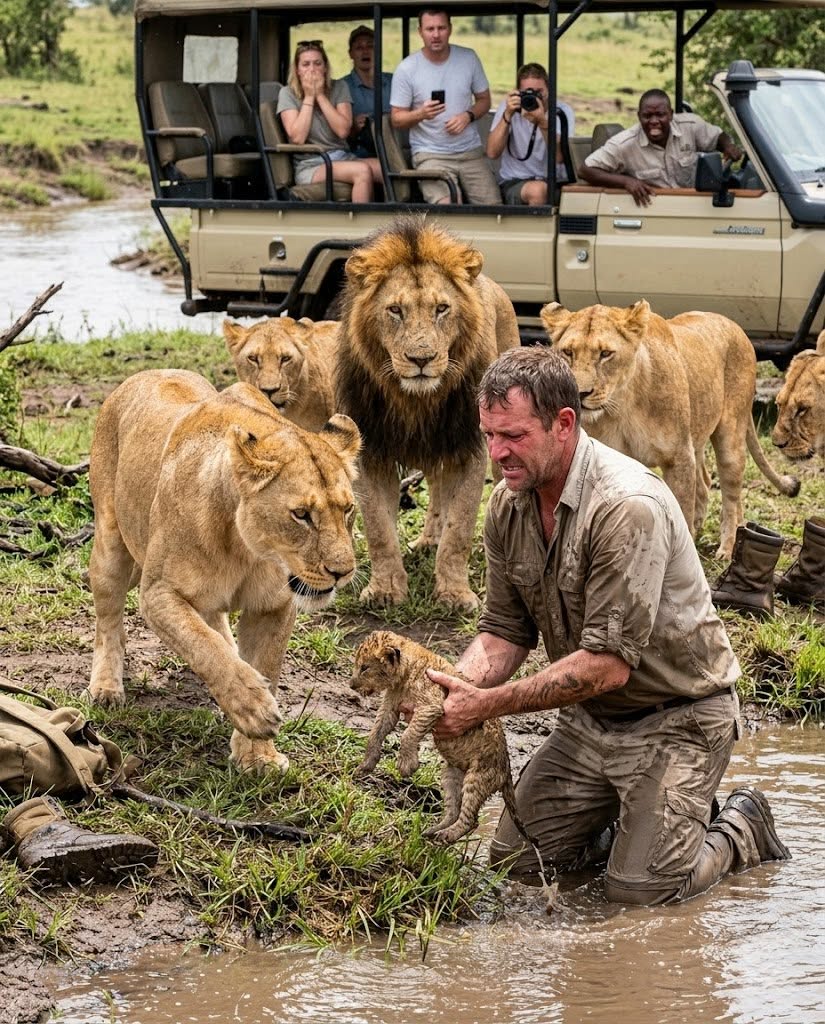
A sound too soft for most humans to hear leaves its throat, and everything changes. The tension in the pride breaks like a snapped wire. One by one, the lions begin to relax, their rigid stances softening as recognition replaces confusion. The female who had first approached lowers her head and moves forward, gently nudging the cub. The cub finally runs to her without hesitation, pressing into her side as if returning home after a long absence.
The rescuer exhales slowly, realizing the truth forming in front of him. This was never abandonment. It was disorientation. The cub had likely been part of a research monitoring program, its tracking device damaged during a storm or territorial clash, leading it far off course. The pride had not been hostile toward him, but toward the confusion of scent and signals they could not fully trust.
A crackle returns through his radio, this time clear. A distant voice confirms a missing cub report from a conservation unit stationed nearby, describing a recent tracking failure in the exact region. The pieces fall into place with quiet clarity.
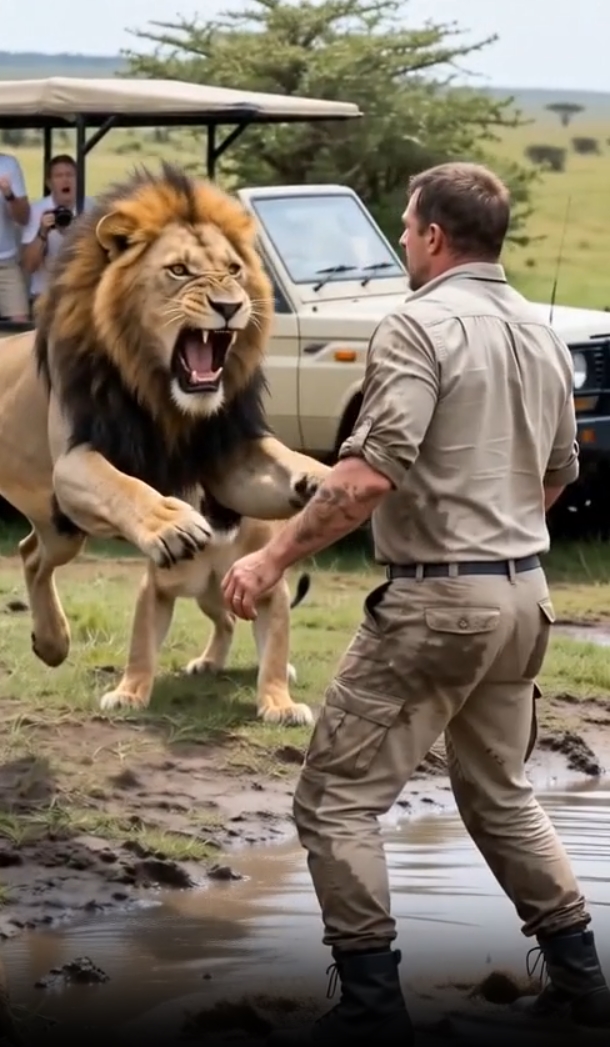
As the sun lowers, the pride begins to move as one, the cub safely integrated back into the group. The dominant male gives one final, long look toward the rescuer. Not threat. Not gratitude in a human sense. Something simpler, older. Acceptance.
The tourists slowly relax, some laughing nervously, others wiping tears they did not realize had formed. The vehicles begin to turn away, the illusion of danger fading into something almost reverent.
The rescuer remains still for a moment longer, watching the lions disappear into the golden grass. Then he lowers his hands, breath steady again, and finally turns back toward the trail.
Behind him, the savannah returns to its rhythm, as if nothing had ever been lost at all.