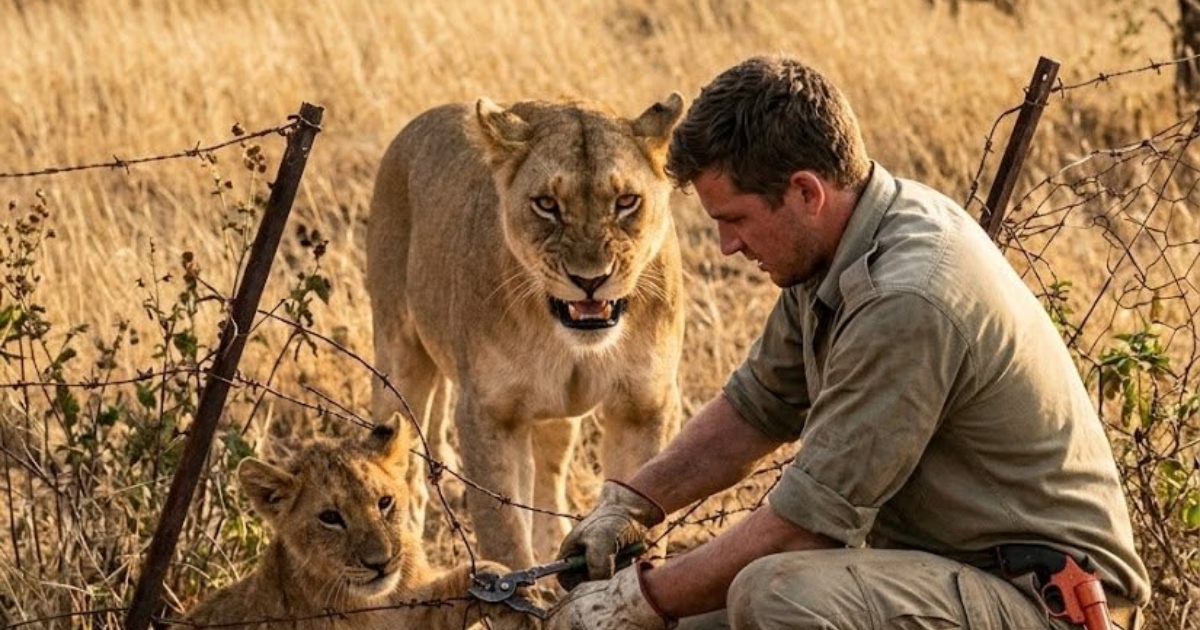
The afternoon sun hung low over the dry grasslands when a call came in about an injured lion cub tangled in a barbed-wire fence on the edge of a remote wildlife reserve. The young animal had apparently wandered too close to an old livestock boundary during the night. By morning, every attempt to free itself had only pulled the sharp wire tighter around one of its front legs.
When the wildlife rescuer arrived, the cub’s frightened cries echoed across the open plain. They carried much farther than anyone would have liked, because somewhere nearby, its mother was listening.
The rescuer spotted the lioness almost immediately. She stood only a short distance away beneath a scattered acacia tree, her golden eyes fixed on every movement. She wasn’t charging, but she wasn’t leaving either. Every instinct told her to protect her cub, and that made every step toward the trapped youngster incredibly dangerous.
Moving slowly, the rescuer avoided direct eye contact with the lioness while speaking in a calm, steady voice. The cub struggled as he approached, causing the wire to bite even deeper into its leg. Blood stained the rusty metal, and time was quickly running out.
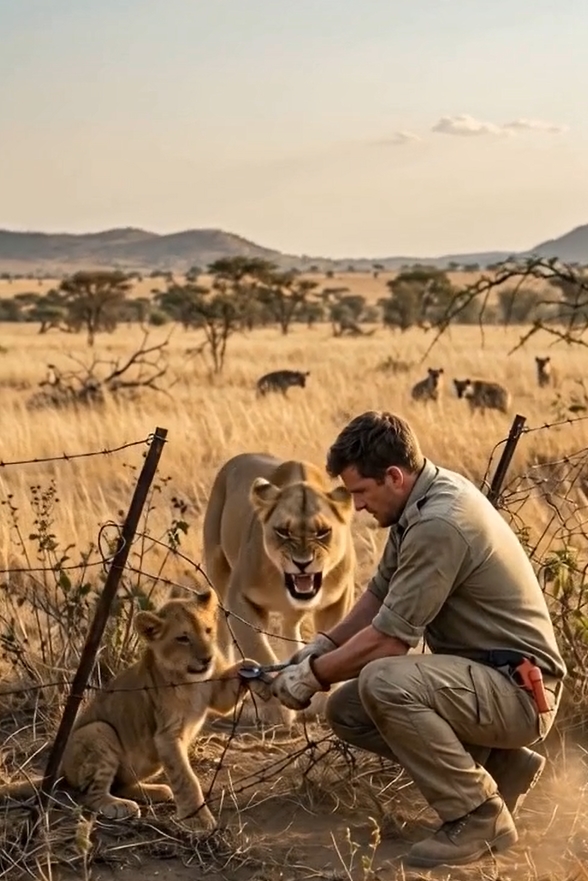
Using a thick protective blanket as a shield, the rescuer carefully covered the cub’s head to reduce its panic. Even then, cutting through the tightly twisted strands of barbed wire proved painfully slow. Metal cutters slipped against the tension, and every snap of the wire made the lioness shift a little closer.
The distance between them grew smaller with every passing minute.
The cub cried out again, louder than before.
The lioness took several deliberate steps forward.
The rescuer knew there would be no time to run if she decided to attack.
Then, just as the final strand was about to be cut, something completely unexpected happened.
The lioness let out a deep, powerful roar—but instead of charging, she stopped. Her ears turned sharply toward the nearby brush. A pair of curious spotted hyenas had appeared, drawn by the cries of the trapped cub.
In an instant, the lioness’s attention shifted away from the rescuer. She sprinted toward the intruders with astonishing speed, chasing them across the grass before they could come any closer. It was the opening the rescuer desperately needed.
Working as fast as possible, he cut the final wire and gently pulled the cub free. Its injured leg was badly swollen, but it could still stand. After checking that no pieces of wire remained embedded in the wound, the rescuer backed away without turning his back on the cub.
A few moments later, the lioness returned.
The rescuer froze.
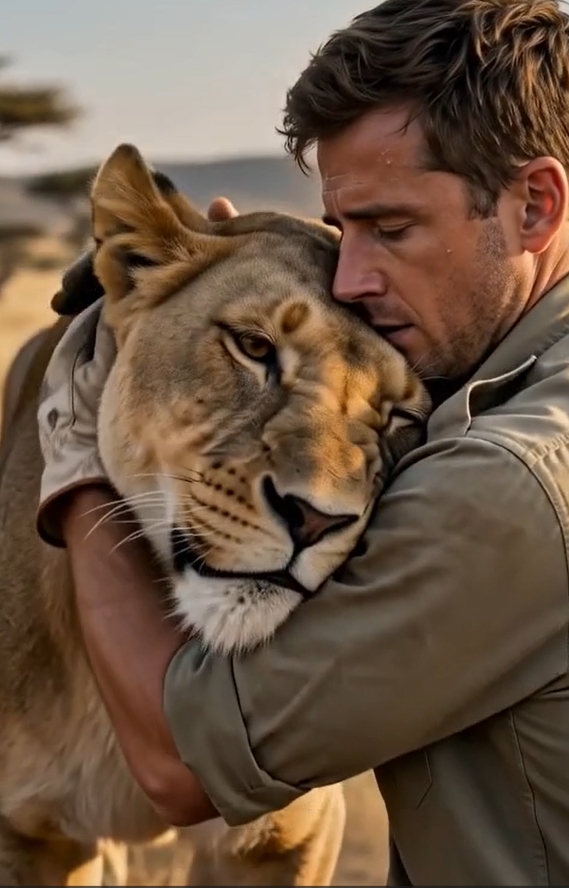
The lioness slowed as she reached her cub, sniffing it carefully from head to tail. She paused at the injured leg, then lifted her head toward the man. For several long seconds, neither moved.
Finally, the cub gave a soft, reassuring chirp and leaned against its mother.
The lioness seemed to understand. Without showing aggression, she gently nudged the cub forward and began walking into the tall grass. The youngster limped after her, stopping only once to glance back before disappearing beside its mother into the fading light.
Only after they had completely vanished did the rescuer realize he had been holding his breath.
Later, veterinarians monitoring the pride from a safe distance confirmed that the cub’s injury healed well over the following weeks. Trail cameras captured it running, playing, and hunting with its siblings once again, leaving only a faint scar as a reminder of the ordeal.
For the rescuer, the day was a powerful reminder that working with wild animals is never about controlling nature. It is about respecting it, understanding it, and stepping in only when human-made dangers threaten lives that would otherwise thrive on their own.
The old barbed-wire fence was removed shortly afterward to prevent another accident. Thanks to one carefully timed rescue—and a mother lion’s unwavering determination to protect her family—a frightened cub was given the chance to grow into the king it was always meant to become.